

Startup Wisconsin Podcast: Funding Alternatives and Growth Capital for Wisconsin Startups
Laura joins Jacob Miller on Startup Wisconsin Podcast in August to discuss why venture capital doesn't fit most Wisconsin companies, alternative financing models like revenue-based financing, and how to match capital to your business timeline and goals.
Publication Date: December 12, 2024
Startup Wisconsin Podcast • Episode 11 with host Jacob Miller
Originally aired: December 12, 2024
Laura joins host Jacob Miller earlier this year to discuss why not every good business should raise venture capital, how Valency Fund's alternative financing models work, and what Wisconsin founders often misunderstand about equity investment.
Key topics covered:
Why venture capital math doesn't work for many Wisconsin companies
Alternative financing models: revenue-based financing, redeemable equity, and structured exits
Research showing Wisconsin exits take 14-15 years vs. national averages
How to match your capital type to your business model and timeline
Manufacturing and agribusiness opportunities hiding in plain sight across Wisconsin
What makes startup ecosystems actually work (hint: it's individuals, not just institutions)
Watch the full interview:
→ Listen on podcast platforms Apple | Spotify
Related from our blog:
→ How Company Stage and Business Model Impact Capital Choices
→ Powering Progress: Wisconsin's Manufacturing and Agritech Surge
→ From Founder to Funder: Why I Started Valency Fund for Wisconsin’s Entrepreneurs
Want insights like these delivered monthly? Subscribe to our newsletter →

StartMidwest: Valency Fund Reimagining Early-Stage Finance in Wisconsin
StartMidwest profiles Laura's journey from chemistry PhD to fund manager and why Valency Fund was built for Wisconsin's "long lasting, profitable private companies" that don't fit the 10x venture capital model—featuring revenue-based financing and evergreen structure.
StartMidwest • Emily Samar
Published: December 10, 2024
StartMidwest profiles Laura's journey from chemistry PhD to fund manager and explores why Valency Fund was built specifically for Wisconsin's "longlasting, profitable private companies" that don't fit the traditional venture capital model.
Article highlights:
Why too many revenue-producing businesses contort themselves into "10x or bust" stories to access capital
The decision to structure Valency as a nonprofit, evergreen fund that can tailor investments to company needs
How revenue-based financing works as an alternative to bank loans and equity rounds
Wisconsin's tradition of building durable, private companies versus chasing public exits
The chemistry behind the fund's name: creating bonds between generations of Wisconsin businesses
Investment focus: agribusiness, advanced manufacturing, and technology companies with $200K+ revenue
Read the full profile:
Related from our blog:
→ From Founder to Funder: Why I Started Valency Fund for Wisconsin's Entrepreneurs
→ Growing Scalable Companies in Wisconsin: Inc. 5000 Analysis
Building a revenue-producing Wisconsin company that needs growth capital? Learn about our approach →
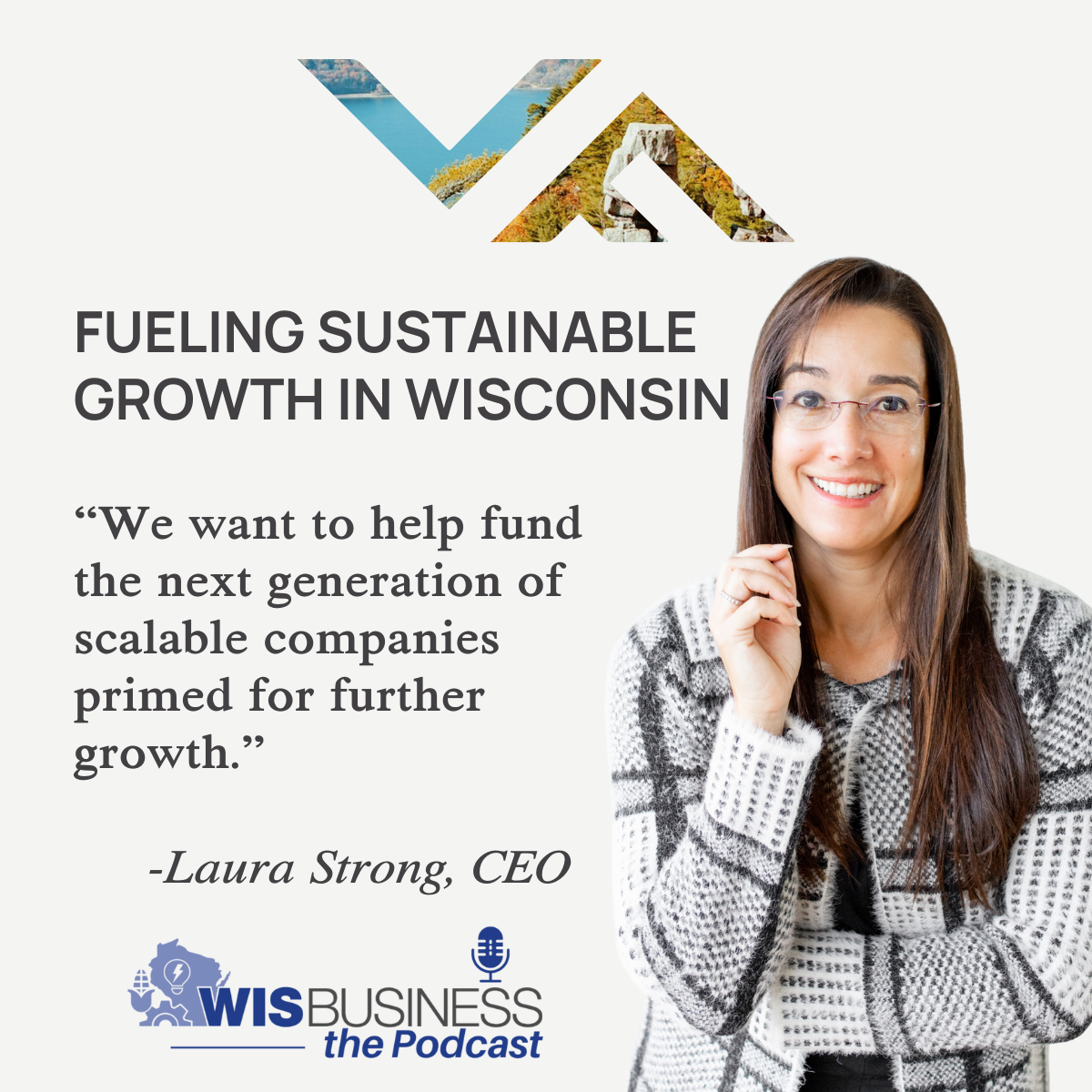
WisBusiness: the Podcast with Laura Strong, Valency Fund
Laura discusses Valency Fund's launch on WisBusiness: the Podcast, exploring how the fund fills Wisconsin's funding gap with flexible instruments like revenue-based financing and redeemable equity for companies in the "messy middle" between bank loans and VC.
WisBusiness: the Podcast with host Alex Moe
Originally aired: November 6, 2024
Laura returns to WisBusiness: the Podcast to discuss Valency Fund's launch, the vision behind filling Wisconsin's funding gap, and how the fund serves companies in the "messy middle" between bank loans and venture capital.
Key topics covered:
The funding gap Laura identified after 25 years working with Wisconsin companies
How Valency Fund's financial instruments (revenue-based financing, redeemable equity) balance risk and reward
What "signal from the marketplace" means and why it matters for investment decisions
Valency Fund's first investment in Pythonic, a Madison AI company
Target sectors: technology, agribusiness, and advanced manufacturing across Wisconsin
Check sizes: $100K-$500K for early growth-stage companies
Listen to the full episode:
Related from our blog:
→ Filling in the Funding Landscape: Valency Fund
→ How Company Stage and Business Model Impact Capital Choices
Interested in alternative financing for your Wisconsin company? Learn more about our investment approach →

MKE Startup News: A New Approach to Scaling WI Startups
Laura discusses Valency Fund's unique nonprofit structure with MKE Startup News, explaining how the fund tests innovative financing mechanisms—including supply chain financing and redeemable equity—for Wisconsin growth-stage companies with $100K-$500K capital needs.
MKE Startup News • Anna Lardinois, Startup Storyteller
Published: April 9, 2025
Laura sits down with MKE Startup News to discuss the vision behind Valency Fund, the funding gap she identified after 25 years in Wisconsin's biotech and entrepreneurship ecosystem, and the innovative financial mechanisms the fund is testing to support growth-stage companies.
Interview highlights:
Why Valency Fund was created to bridge the gap between venture capital and bank loans
Testing revenue-based financing beyond SaaS models for high-margin businesses
Supply chain financing that leverages capital from existing customer relationships
Redeemable equity as an alternative to forced exits, aligning with Wisconsin's generational company culture
The decision to structure as a nonprofit to enable experimentation and sustainable capital recycling
Target profile: growth-stage companies with recurring revenue, clear path to profitability, and capital needs of $100K-$500K
The chemistry behind the name: forming bonds to unite founders, partners, and resources
Read the full interview:
Related from our blog:
→ How Company Stage and Business Model Impact Capital Choices
→ Filling in the Funding Landscape: Valency Fund
Ready to scale your Wisconsin business without pressure to sell? [Learn about our investment approach →]